Five Mistakes That Turn a Simple Breakdown Into a Major Recovery
Breakdowns on the interstate happen every day. Most of them are routine: a warning light comes on, a driver pulls over, a service truck rolls out, and the job gets done. In theory. But across northern Ohio, our I-80 heavy towing crews see a similar pattern play out again and again: it’s the small decisions made under pressure that easily turn simple roadside stops into long recoveries, sometimes with real safety risks involved.
What changes the outcome is not the breakdown. It is what the driver does in the first few minutes after it happens.
Here are the five mistakes that cause the most problems.
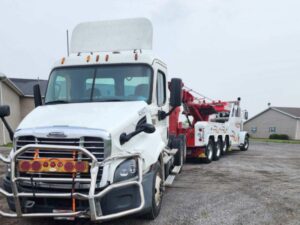
1. Stopping Too Soon on a Bad Shoulder
One winter morning, a driver pulled onto the shoulder as soon as a warning light came on. The pavement looked clear, but a thin layer of ice had formed overnight. Before the brakes were fully set, the trailer slid partially off the shoulder.
Moments later, the driver opened his door without checking traffic. A passing truck had to swerve hard to avoid hitting him.
Situations like this start with urgency. The instinct is to stop immediately. But if the truck still has control and momentum, moving a little further can make all the difference.
A wider shoulder, a rest area, or a service plaza can turn a risky stop into a controlled one. Stopping in the wrong place often creates a bigger problem than the original breakdown.
2. Setting Triangles That Do Not Warn Anyone
Warning triangles are one of the simplest safety steps, but they are often done halfway or not at all.
It is common to see a single triangle placed right behind the trailer. At highway speeds, that gives approaching drivers almost no time to react. The proper setup is spaced out for a reason. One triangle close to the truck, one further back, and one at distance. On fast moving roads, that distance needs to stretch even more.
It takes a few minutes to set them correctly. Skipping that step or rushing it puts the driver, the truck, and everyone else on the road at risk.
3. Trying to Fix the Problem Alone
Another pattern shows up in bad weather. A driver decides to handle the issue alone.
In one case, a driver tried to install chains in the dark during freezing conditions. He slipped on ice and injured his knee before the job was even started. What could have been a straightforward assist turned into a longer, more complicated call.
Modern trucks are not simple machines, especially in winter conditions. Air systems, brakes, and traction issues all require the right tools and experience.
I-80 heavy towing crews arrive equipped for these situations, with the gear and manpower to handle the job safely. Trying to handle it alone often adds time, risk, and sometimes injury.
4. Calling the Wrong Help First
Not all calls for help are equal.
When a driver routes a breakdown through a passenger motor club, the job is usually passed through layers of dispatch before it reaches a heavy towing operator. That process takes time.
In many cases, the same local company ends up doing the work anyway, just later than they could have.
Calling a qualified provider of I-80 heavy towing directly gets the right equipment moving immediately. When a job needs a rotator or a full recovery setup, that time difference matters.
5. Expecting a One Hour Recovery
One of the most common misunderstandings is how long a recovery actually takes.
Drivers often tell dispatch they will be moving again within the hour. In reality, most I-80 heavy towing recoveries take significantly longer, especially on a busy corridor like this.
Traffic control, weather conditions, and coordination all add time before the actual recovery even begins.
A simple pull from a stable shoulder might be quick. But once you add ice, traffic, or load complications, the timeline stretches. Planning for that upfront leads to better decisions and less pressure on everyone involved.
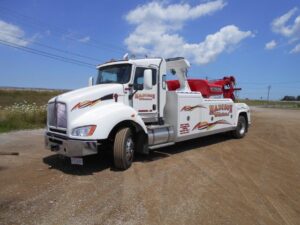
Madison Motor Service is Your Experienced I-80 Heavy Towing Provider
Madison Motor Service has been handling I-80 heavy towing in northern Ohio for decades, working this stretch of highway through every season.
The I-80 heavy towing calls are consistent: brake issues, winter jackknifes, trucks pushed too far onto unstable shoulders. Each one starts with a breakdown, but the outcome depends on what happens next.
The right decision early can keep a situation simple. The wrong one can turn it into a full recovery.
FAQs
What is a rotator and when do I need one?
A rotator is a heavy wrecker with a hydraulic boom that swings to almost any angle. It is built for rollovers, jackknives, and trucks in soft ground. Most basic recoveries do not need one, but a fleet manager should ask early if the rig is on its side or far off the road.
How do snow and ice change response times?
Heavy snow can double or triple normal response times because trucks have to slow down and chain up. Most operators stage trucks ahead of a forecast storm to keep response shorter. Always give an exact mile marker so the wrecker driver does not lose time finding the rig.
Will police shut down lanes for my breakdown?
They will if the truck cannot clear the lane on its own. Quick clearance laws also let police push or tow the rig themselves. The fleet ends up with the bill for any state assist.
Is roadside repair cheaper than a tow?
Most of the time, yes. A service call for a flat, a jump, or a fuel issue runs less than a recovery tow. A heavy operator can quote the difference once they see the truck.
How long can a driver stay on the clock during a breakdown?
FMCSA hours of service still apply, but on duty time during a breakdown is logged differently. A driver should call dispatch right away to get the time recorded correctly. Some long recoveries push a driver past the daily limit.
Can my CDL be at risk after a breakdown crash?
Yes if the crash involves a violation like missing triangles, chain rules, or hours of service issues. Police can issue a citation that goes on the driver record. Cooperating with the state and following FMCSA rules limits the risk.