The Sudden Swing of a Trailer
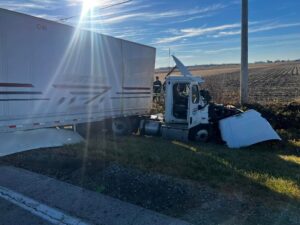
When we talk with drivers about control on the road, jackknifing always comes up. It is one of the most alarming situations a truck driver can face. A jackknife happens when the trailer swings toward the cab and forms a sharp angle, almost like a folding pocket knife. The moment develops fast, and the truck can block lanes or slide off the roadway before a driver can recover.
Many drivers in the area ask us about this during Fremont semi towing calls. A jackknife rarely appears out of nowhere. Road conditions, braking habits, and trailer balance all play a role in how a truck responds under stress. By looking at the causes, drivers can build habits that reduce the chance of the trailer swinging out of line.
Loss of Traction Starts the Problem
The most common trigger for a jackknife begins with traction loss. When the drive wheels lock during hard braking, the tractor loses grip with the pavement. The trailer still carries momentum, which pushes forward and causes the trailer to pivot around the tractor.
Rain, snow, and icy pavement increase the risk. Even dry roads can create trouble if braking happens too abruptly. A sudden maneuver can send weight forward and lighten the rear wheels, which makes traction easier to lose.
Trailer Weight Distribution Matters
Cargo placement has a direct impact on stability. If weight sits unevenly in the trailer, the load can shift while braking or turning. That shift pulls the trailer in one direction and starts the angle that leads to a jackknife.
Drivers and loaders can reduce that risk with a few simple habits:
- Place heavier cargo low and centered in the trailer
- Secure freight so it cannot slide during travel
- Avoid large empty sections that allow cargo movement
- Confirm the trailer weight balance before departure
Balanced loads help the trailer track behind the tractor instead of pushing it sideways.
Speed and Braking Decisions
Speed creates momentum, and momentum pushes the trailer forward during sudden stops. When braking happens quickly at higher speeds, the tractor can slow faster than the trailer. The trailer keeps moving and swings outward.
Drivers who maintain smoother braking patterns give the truck time to slow evenly. Gradual braking keeps the trailer aligned behind the tractor. Following distance also plays a major role, since extra space allows slower and steadier deceleration.
Madison Motor Delivers Reliable Fremont Semi Towing Support
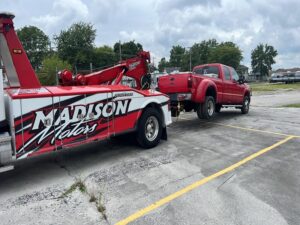
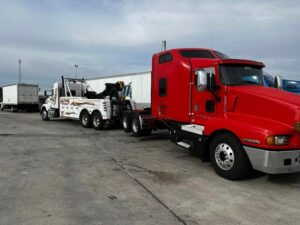
We spend a lot of time on the road assisting drivers through Fremont semi towing calls, and jackknifed trucks are one of the situations we encounter. Clearing these incidents requires careful planning and experienced operators. The position of the tractor and trailer must be corrected step by step so the truck can return to a straight alignment.
Our team at Madison Motor approaches Fremont semi towing with patience and attention to detail. We examine the truck angle, the roadway, and the surrounding traffic before moving anything. Each Fremont semi towing job requires a steady process that prevents further damage to the tractor, trailer, or cargo.
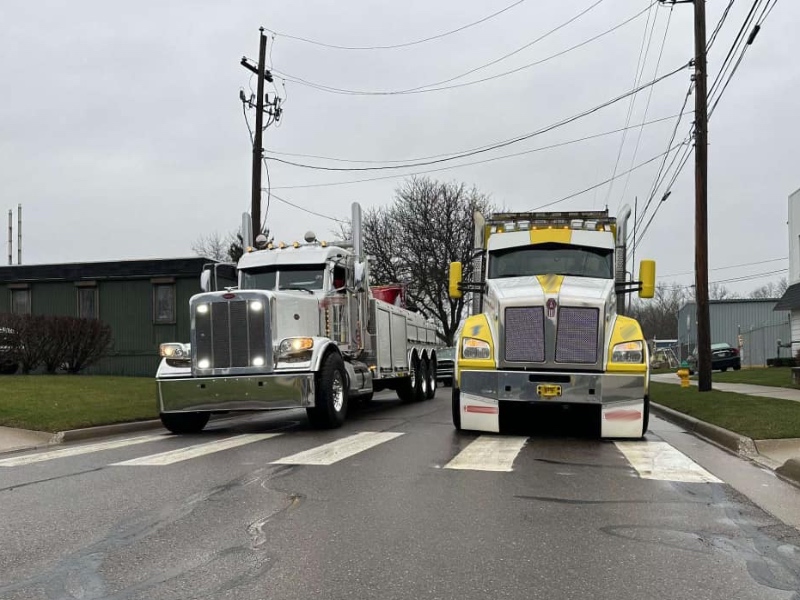
Drivers across the region call us for Fremont semi towing when a truck blocks the roadway or becomes stuck after a slide. We bring heavy duty equipment designed for large commercial vehicles and use controlled pulls to reposition the trailer and tractor. Every Fremont semi towing call reminds us how quickly road conditions can change.
At Madison Motor, we spend our days responding to Fremont semi towing requests, helping trucks return to the road and helping drivers move forward after difficult moments. Our work places us alongside the trucking community every day, and we take pride in being part of the support system that keeps freight moving through the Fremont area.
FAQ
What is the first thing a driver should do if a trailer begins to swing out of line?
Ease off the brakes and avoid sudden steering inputs. Abrupt movements can worsen the angle between the tractor and trailer. Keeping the steering steady and allowing the wheels to regain traction can help the trailer straighten.
Can modern safety systems prevent jackknifing?
Many newer trucks include electronic stability control and anti lock braking systems. These systems help maintain wheel traction and reduce the chance of wheel lock during hard braking. They lower the risk, but driver behavior and road conditions still play a major role.
Do empty trailers increase the risk of losing control?
Yes. An empty trailer weighs far less than a loaded one, which means it has less downward force on the tires. Reduced tire grip can make the trailer more likely to slide during braking or sharp turns.
How does following distance affect trailer control?
Extra space between vehicles allows more gradual braking. Gradual braking keeps the tractor and trailer slowing at a similar rate, which helps maintain alignment and control.
Are certain road surfaces more likely to cause trailer swings?
Wet pavement, ice, snow, gravel, and oily road surfaces reduce tire grip. Any surface that lowers traction can increase the chance that a trailer will slide or pivot during braking.
What happens to a truck after a jackknife incident?
The truck and trailer usually require inspection before returning to service. Tires, axles, cargo restraints, and coupling components may experience stress during the event, so checking these areas helps ensure the vehicle operates properly afterward.