Fact vs Fiction
Some drivers have concerns about calling a tow truck and transmission damage. They worry that hooking a vehicle to a tow truck automatically ruins the transmission or leads to costly repairs later. Those fears usually come from outdated information or stories passed around for years without much context. But modern Gibsonburg towing, when done correctly, does not harm a vehicle’s transmission. The key lies in using the proper method for the vehicle type and following manufacturer guidelines every time.
Myth #1: Towing Always Ruins Your Transmission
This is the most common misconception. Many people believe that once a car has been towed, the transmission will suffer damage no matter what. That simply is not accurate.
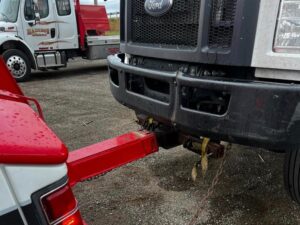
Transmission damage happens when a vehicle is towed incorrectly. If drive wheels remain on the ground while the engine is off, internal components may move without lubrication. We prevent that by lifting the correct wheels or using a flatbed when required. Our Gibsonburg towing approach always matches the vehicle’s drivetrain and condition.
To make it simple, we consider:
- Front wheel drive versus rear wheel drive
- All wheel drive systems
- Manual versus automatic transmissions
- Whether the vehicle can shift into neutral
Each of these factors guides how we handle the tow.
Myth #2: Flatbed Towing Is the Only Safe Option
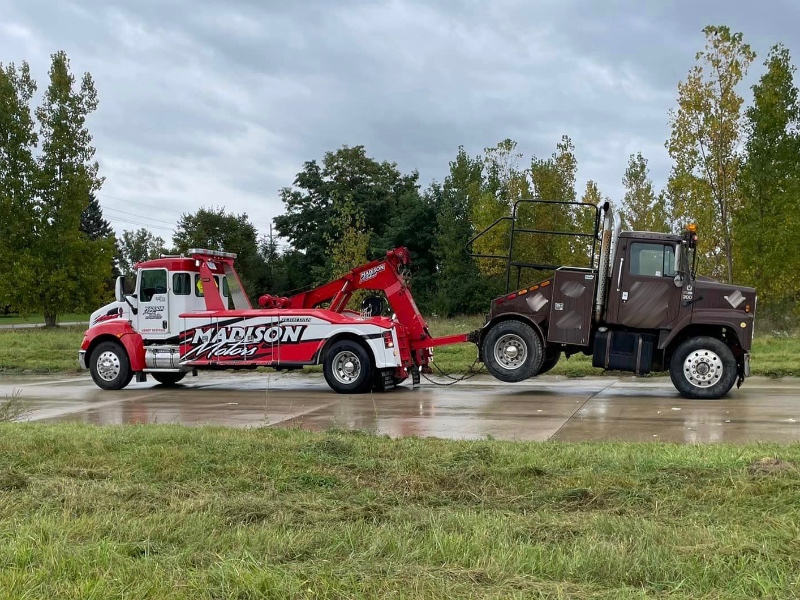
Flatbeds are a great tool, but they are not the only safe solution. Some drivers assume that any other method guarantees towing and transmission damage. That belief overlooks how wheel lift systems work and how vehicles are designed.
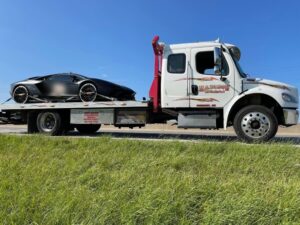
A properly positioned wheel lift keeps the drive wheels elevated off the road. That prevents internal transmission movement while the vehicle is off. For many cars and light trucks, this method works perfectly well. We evaluate the situation before we load any vehicle, and we choose the safest setup for that specific make and model.
In Gibsonburg towing calls, road conditions and vehicle placement also influence our choice. A flatbed may fit best in tight areas, while a wheel lift might allow faster clearance in others. The goal remains the same every time. We protect the transmission and transport the vehicle correctly.
Myth #3: Putting the Car in Neutral Solves Everything
Some drivers believe shifting into neutral completely prevents towing and transmission damage. Neutral helps in certain cases, but it is not a universal fix.
In automatic transmissions, internal parts still move if drive wheels stay on the ground. Without the engine running, fluid does not circulate as designed. That lack of lubrication creates risk over longer distances. We never rely on neutral alone to protect a transmission.
Instead, we either lift the drive wheels or secure the entire vehicle on a flatbed. That eliminates unnecessary movement inside the transmission. For Gibsonburg towing jobs, we follow a consistent process that removes guesswork and reduces risk.
Why Drivers Trust Madison Motor Towing for Gibsonburg Towing
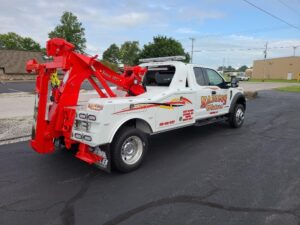
As Madison Motor Towing, we approach every call with a clear plan. We serve Gibsonburg and surrounding areas with equipment suited for passenger cars, SUVs, and light trucks. Our Gibsonburg towing service focuses on correct vehicle positioning, secure loading, and controlled transport from start to finish.
We know that concerns about towing and transmission damage often come from past experiences or secondhand advice. Our job is to replace those myths with accurate information and careful handling. Every Gibsonburg towing assignment receives the same level of attention, regardless of distance or vehicle type. By focusing on proper loading and transport, we prevent towing and transmission damage while serving drivers throughout the Gibsonburg, OH, area and beyond.
FAQ
Can towing a car with an automatic transmission cause damage?
Yes, it can if the vehicle is towed incorrectly. Automatic transmissions rely on fluid circulation to lubricate internal components. If the drive wheels remain on the ground while the engine is off, parts may move without proper lubrication. Using the correct towing method prevents this issue.
Is flatbed towing always required for all wheel drive vehicles?
In most cases, yes. All wheel drive systems connect power to all four wheels, which means lifting only two wheels can strain the drivetrain. A flatbed keeps all four wheels off the road and avoids unnecessary mechanical stress.
Does putting a vehicle in neutral protect the transmission during a tow?
Neutral may reduce resistance, but it does not fully protect the transmission. Internal components can still rotate if the drive wheels move. The safest approach involves lifting the correct wheels or securing the vehicle completely off the ground.
How do towing professionals decide which method to use?
Professionals look at the drivetrain type, vehicle condition, and manufacturer recommendations. They also consider distance and road conditions. This evaluation ensures the vehicle remains protected during transport.
Can short distance towing still damage a transmission?
Distance matters, but even a short tow can cause damage if performed incorrectly. Proper positioning and loading matter more than mileage. Using the right equipment eliminates unnecessary movement inside the transmission.
What should I tell a tow operator before my vehicle is moved?
Share your vehicle’s make, model, drivetrain type if you know it, and whether it can shift into neutral. Mention any mechanical issues such as locked wheels or transmission problems. Clear information helps the operator choose the safest towing method.