Rubber Gone, Recovery On
A loaded semi can lose a tire on US-14 and still look manageable from the cab for the first few seconds. The driver hears the bang, feels the pull, and tries to get the rig onto the shoulder without crossing into traffic. On US-14 semi towing calls, the tire is often only the first thing that failed.
Once rubber starts whipping at highway speed, it can tear into brake lines, fenders, mudflaps, wiring, and air fittings. A damaged vehicle may stop with one tire missing, but the real problem may be a locked brake, bent rim, or trailer sitting too close to traffic for a roadside repair.
How Blowouts Turn Into Bigger Damage
Heat, low pressure, worn tread, road debris, and overloaded axles all play a role. An underinflated tire flexes too much, builds heat inside the casing, and can come apart under a loaded trailer. A chunk of metal, pothole edge, or loose recap can finish the job fast.
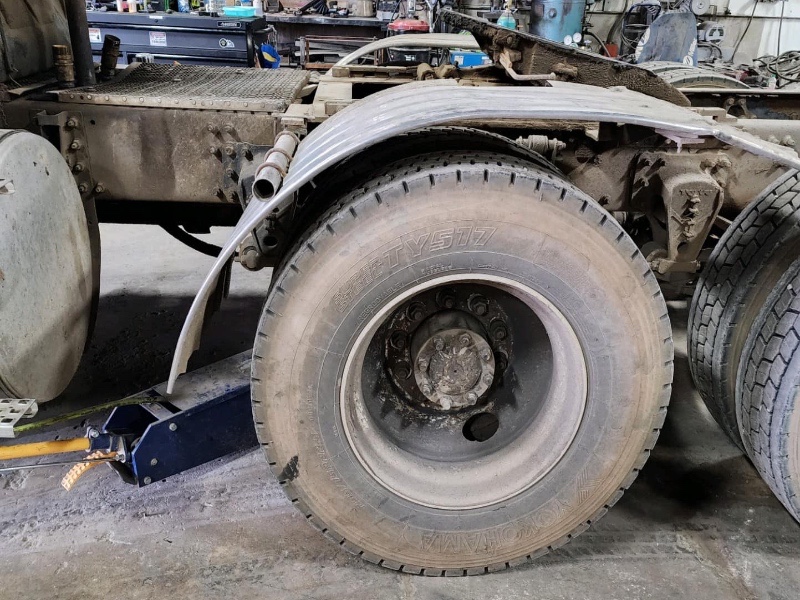
Steer tire failures usually get the most attention because they pull the front end hard. Drive tire failures can be just as expensive. Rubber can wrap the axle, pull air lines loose, rip off brackets, or damage the wheel end. We have seen a tire change turn into hours of recovery work because the truck kept rolling after the first failure.
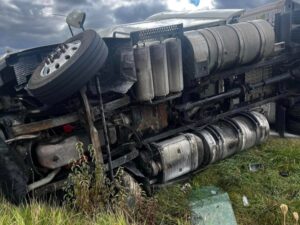
A clean tire failure may only need a tire service truck. It becomes a heavier recovery when the blowout damages brakes, suspension, steering, air lines, or leaves the truck in a bad road position. A semi halfway in the lane with a locked wheel is not a normal tire call.
We look at the truck’s position, shoulder width, load weight, road grade, and traffic flow before moving anything. Sometimes the tractor can go to the shop while the trailer waits for another tractor. Sometimes the whole combination has to move together. On US-14 semi towing jobs, the safest next move depends on the damage and what the freight needs next.
First Moves A Driver Should Make
The first move is control. Hold the wheel steady, ease off the throttle, and let the truck slow down without hard braking. A sudden brake hit can make the trailer push or sway, especially with a full load and a narrow shoulder.
Once stopped, flashers go on and triangles get placed only if traffic allows it. Stay clear of the lane. For US-14 semi towing, dispatch needs the closest landmark or mile marker, direction of travel, failed tire position, trailer type, load status, visible damage, and whether the truck can still build air. Those details decide what truck rolls.
What We Check Before Moving the Rig
Before the hook goes on, we check more than the missing tire. We look at the rim, hub, brake chambers, air lines, suspension, fender damage, and anything hanging near the wheel area. If the brakes will not release or the wheel end looks damaged, forcing the truck to roll can create a larger repair.
A quick scene check usually covers:
- Tire position and wheel damage
- Air pressure and brake release
- Bent fenders or loose brackets
- Broken lights, wiring, or mudflaps
- Shoulder width and traffic exposure
- Loaded trailer weight and cargo concerns
On US-14 semi towing calls, those checks save time later. A rushed move can turn one damaged tractor into a second tow, a trailer transfer, or a longer repair.
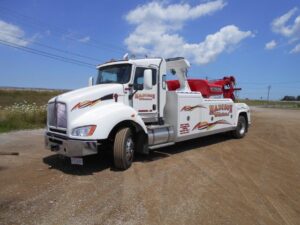
Madison Motors Handles US-14 Semi Towing After Blowouts
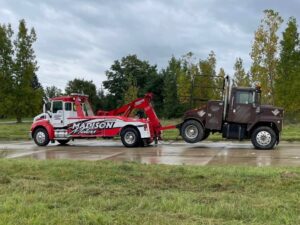
Madison Motors, also known through its long history as Madison Motor Service, started in 1927 as Madison Street Garage and became the first towing service in the Tiffin area. The company moved to Fremont in 1984 and has stayed part of the local community since. Our US-14 semi towing work fits the same practical approach we bring to commercial towing, roadside assistance, and heavy recovery day and night.
We handle US-14 semi towing when a blown tire turns into brake damage, a disabled tractor, a loaded trailer problem, or a recovery that needs more planning than a tire swap. Our crew looks at the tire, truck, trailer, road position, and next destination before deciding how to move the rig. A blowout may start with one bad tire, but the job is getting the driver, truck, and load off the roadside without adding damage that did not need to happen.
FAQs
What should a driver do if a truck tire blows at highway speed?
Hold the wheel steady, ease off the throttle, and avoid hard braking. Move toward the shoulder only when there is enough room to do it without swerving.
How can a blown tire damage more than the tire?
Loose rubber can hit brake lines, air hoses, wiring, fenders, lights, and mudflaps. If the rim rides on pavement, wheel-end damage can happen fast.
When should a driver avoid a roadside tire change?
Avoid it if traffic is too close, the shoulder is narrow, the ground is soft, or the truck has brake or suspension damage. A tire change is not worth risking the driver or service crew.
Why does the failed tire position matter?
A steer tire failure can affect steering control. A drive tire failure may damage air lines, mudflaps, brakes, or axle parts. Dispatch needs that detail to send the right help.
Can a loaded trailer change the recovery plan?
Yes. Cargo weight affects how the truck can be moved, where it can be taken, and whether the tractor and trailer should stay together.
What photos help after a semi tire blowout?
Photos of the failed tire, rim, brake area, shoulder, trailer, and visible damage are useful. They help the towing team understand the scene before arriving.