An Unload That Doesn’t Go to Plan
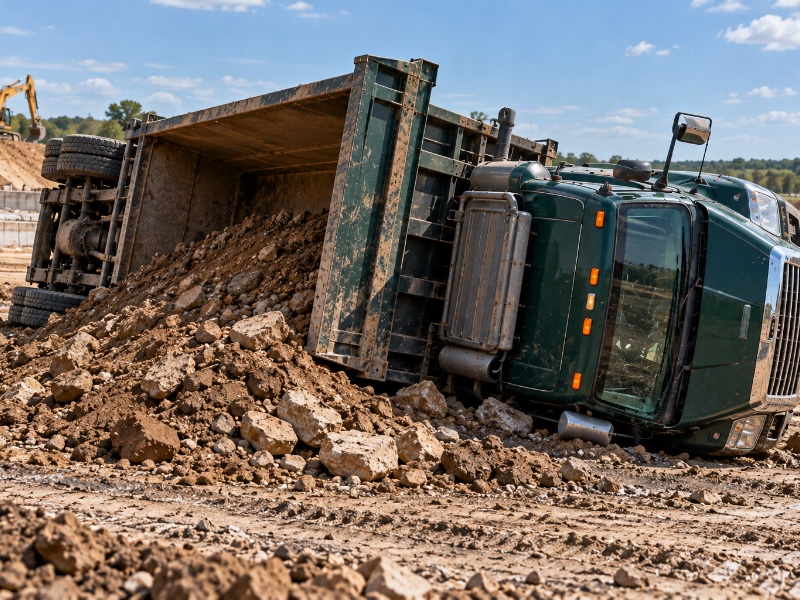
A dump truck backs into a work area, lines up to unload, and begins raising its bed. Normally, the material slides out and the truck moves on. But sometimes a load sticks, the ground gives a little, or the bed starts leaning in a direction nobody wants to see. That’s when Fremont dump truck towing may involve collecting a truck that won’t run. And more. A tip-over can shut down an access lane, scatter material, and leave other trucks waiting to get through. On a busy jobsite, one disabled dump truck can interrupt everybody’s schedule.
It’s Not Just Heavy. It’s Top-Heavy.
A dump truck is designed to carry a load low in its body while traveling. Once the bed of the vehicle rises, that weight moves higher, along with the truck’s center of gravity. There’s less margin for a sideways shift.
Picture wet dirt clinging to one side of the bed. As the opposite side empties, the remaining material can pull the truck toward the heavier side. The taller the bed rises, the more important that imbalance becomes.
And the truck doesn’t need to be moving forward to roll over. It can tip while parked, with its wheels barely turning.
The Ground Gets a Vote
An unloading spot isn’t always a broad stretch of level pavement. There may be compacted gravel beside soft fill, a rut hidden beneath a tire, or a slight slope the driver barely notices.
If one set of tires sinks as the load rises, the truck begins leaning. Add a sticky load and a raised bed, and the conditions for a rollover can develop quickly. The ground might have supported the truck comfortably with its bed down, then become a problem as the weight moved upward.
Once the Bed Is Up, We Have to Slow Things Down
When a dump truck is leaning or has already rolled, we don’t rush to attach a wrecker. We need to understand what’s holding the bed, whether the load can shift, and what damage the truck has suffered.
A damaged hydraulic cylinder, hinge, or mounting point can make the bed unpredictable. We don’t work beneath an unsupported raised bed, and we may need qualified mechanical assistance or other resources to stabilize it before moving anything.
The first goal is preventing an unstable situation from getting worse.
Getting It Upright Doesn’t Mean It’s Ready to Leave
An overturned truck may have material trapped in its bed, damaged suspension, or a body that no longer lines up with the chassis. The lift has to account for more than the weight stamped on the truck’s specifications.
During dump truck recovery near Fremont, we consider the remaining load and how the bed might move as the truck changes angle. Recovery equipment can help reposition or upright a truck, but an uncontrolled shift in weight is a problem regardless of how powerful the wrecker is.
There’s also a difference between setting a truck back on its wheels and taking it to a repair shop. For heavy-duty dump truck towing in Fremont, we still have to evaluate the wheels, axles, steering, frame, and bed. If the body cannot be lowered and secured appropriately, an ordinary road tow may not be possible.
Before the Truck Moves, Here’s What We Check
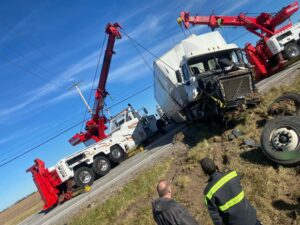
With Fremont heavy truck recovery, the condition of the bed often determines what happens next. Our questions aren’t always about the engine:
- Is material still inside? Uneven cargo can change the truck’s balance.
- Is the bed properly supported? Hydraulics alone aren’t a safe substitute for mechanical support.
- Are the hinges and mounts intact? Structural damage can change the recovery plan.
- What condition are the axles and tires in? A truck that’s upright may still be unable to roll normally.
- Can it travel at normal height? Overhead clearance matters if the bed won’t lower.
Those answers shape dump truck transport around Fremont, whether the truck is stranded beside a road or blocking a work area. Sometimes the right plan includes qualified repairs or load handling before the actual tow.
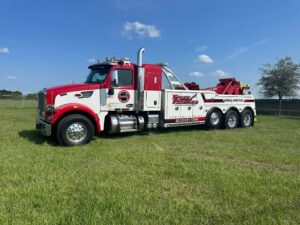
Madison Motor Towing: Fremont Dump Truck Towing You Can Count On
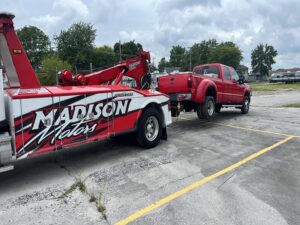
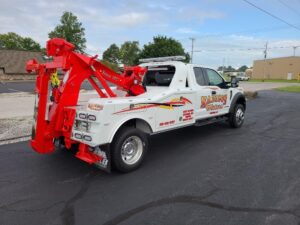
We’ve been in the towing business since 1927, when our family opened Madison Street Garage in Tiffin. What began as the area’s first towing service has grown into Madison Motor Towing & Heavy Duty Semi Truck Wrecker, still operated by our family today. We help individual drivers and commercial customers with towing and roadside assistance, including heavy-duty needs. A dump truck with a raised or damaged bed calls for an assessment of the whole machine. Never a rushed hookup. For dump truck towing in Fremont, our job is to determine how the equipment can be recovered and transported based on its actual condition.
Frequently Asked Questions
Why do dump trucks sometimes tip over while unloading?
Raising the bed raises the center of gravity. Uneven ground or material sticking inside the bed can then cause the truck to lean and potentially overturn.
Can a dump truck roll over without moving?
Yes. A rollover can occur while the truck is stationary and unloading, particularly if the ground is uneven or the load shifts sideways.
What should an operator do if the dump truck starts leaning?
Stop the unloading operation and follow the manufacturer’s emergency procedures. Avoid sudden movements or attempts to correct the problem that could make the truck less stable.
Can an overturned dump truck be recovered without unloading it?
Sometimes, but the remaining material must be assessed first. An unstable or uneven load may need to be handled separately before the truck can be uprighted.
Why can’t a damaged dump truck always be towed immediately?
The bed, chassis, steering, axles, or suspension may be damaged. We need to determine whether the truck can be moved in its current condition or requires additional preparation.
Can a raised dump bed be dangerous even after the truck has stopped?
Absolutely. The bed can contain trapped hydraulic pressure or unstable material, and damaged supports can fail unexpectedly. Nobody should work underneath it without appropriate mechanical support.